


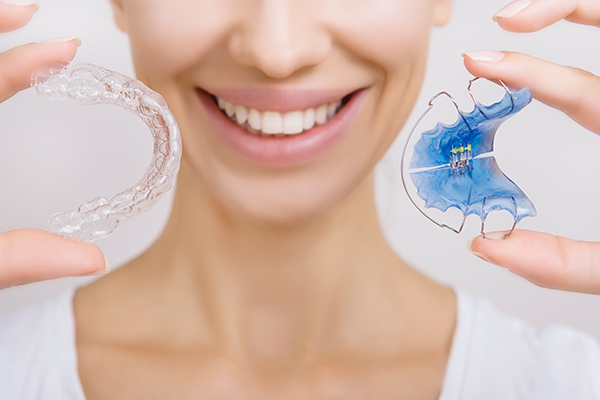
You’ve been counting the days until your braces come off and you can finally see your new beautiful smile without anything in the way. But that’s not the end of your treatment! To keep all the progress your smile has made over the last few months or years, you’ll be given a retainer. It’s common for patients to ask us “why do you need a retainer?”
Read on to learn why retainers are critical after braces, and what can happen if you don’t wear yours!
What Happens If I Don’t Wear a Retainer After Braces?
Braces move your teeth slowly and gently into the position that your orthodontist finds ideal for a healthy mouth. But even after months or years of orthodontic treatment, they won’t be “locked” into place.
When you remove your braces, you remove the force that was holding them in their ideal placement. Once that brace is gone, they’ll tend to shift back. This is called relapse.
Relapse can ruin the time and money you spent correcting your smile throughout your orthodontic treatment. In the worst cases, it can leave your mouth just as vulnerable as it was before treatment.
Most patients will experience some degree of relapse after removing braces. So, you may still be wondering “Why do you need a retainer if they can’t prevent relapse?” The truth is that retainers prevent the most serious cases of relapse. While a slight relapse is expected, without a retainer, you will lose a significant amount of progress.
Ultimately, a retainer keeps your teeth as close to their ideal position as possible following treatment. If you ignore your orthodontist’s warnings to use your retainer, especially for the few months after your braces come off, you will likely run into issues with your alignment again.
How Long Do You Need a Retainer?
Immediately following the removal of your braces, you will need to wear your retainer for most of the day. Outside of eating and drinks, it’s a good idea to have the retainer in for at least 22 hours. This can last anywhere from three to six months for the average person, but each case varies.
When your orthodontist becomes confident that your teeth are relatively stable, you won’t have to wear your retainer during the day. From this point, you are recommended to wear your retainer only at night. To protect your teeth from additional shifting, you will want to continue this practice for the rest of your life.
Are There Different Types of Retainers?
Yes, there is one main differentiator when it comes to retainers:
Removable Retainers
Removable retainers are a common type of retainer that can be, as their name implies, removed as the wearer needs. This allows you to wear them throughout the day, but still take them out for eating, drinking and brushing your teeth.
Removable retainers come in different types as well. Traditional Hawley retainers are larger and very durable. Their biggest benefit comes in the ability for the orthodontist to make slight adjustments with them to help keep your teeth in their ideal position without needing to revert to braces.
Some other retainers are clear and slip right over your teeth, similar to how Invisalign aligners look. These can be a subtler option, and some consider them more comfortable to wear.
It’s important to remember that just because the retainer is removable, you shouldn’t spend too much time without it in. Your orthodontist will give you instructions for how often to wear it.
Permanent Retainers
Another type of retainer is the fixed lingual retainer. Your orthodontist will bond a wire to the back of your teeth that will stay in place. These retainers are easier to wear in the sense that you can’t remove them or lose them.
If you have a permanent retainer, you need to take extra care to keep it clean. The wire can be another place for bacteria to attach and grow. This is no different than the extra care you took when maintaining your braces.
Read our guide on cleaning retainers for more help with taking care of your retainer!
The Science Behind Retainers
When your braces come off, your teeth may look “finished,” but underneath the surface your smile is still settling in.
Here’s why: braces move teeth through the bone and surrounding tissues. After treatment, your body needs time to stabilize everything in its new position. The ligaments that hold each tooth in place (and the bone around them) gradually adjust—but that process doesn’t happen overnight.
On top of that, teeth naturally shift throughout life. Everyday forces like chewing, clenching/grinding, and even normal aging can slowly nudge teeth out of alignment over time.
That’s where retainers come in. A retainer helps “hold the line” while your smile stabilizes—then continues protecting your results long-term.
Bottom line: Retainers are what keep your orthodontic results from slowly fading.
Your Retainer Schedule (for the Average Person)
Most patients wear their retainer in phases. Your orthodontist will tell you exactly what’s right for your case, but a common plan looks like this:
Phase 1: Full-Time Wear
Right after braces are removed, you’ll typically wear your retainer about 22 hours per day (only taking it out to eat, drink anything other than water, brush, and floss).
This is the most important stage because it’s when your teeth are most likely to shift.
Phase 2: Nighttime Wear
After the initial full-time period, most patients transition to wearing their retainer only at night.
Phase 3: Long-Term Maintenance
Even after your teeth feel “stable,” we usually recommend continuing nighttime wear long-term. This helps keep your smile straight as your body changes over the years.
A few things that can affect your schedule:
-
How much movement was needed to straighten your teeth
-
Your bite correction (overbite/underbite/crossbite)
-
Growth and age
-
Clenching or grinding
-
Your consistency during the first few months
If you’re ever unsure how often you should be wearing your retainer, call our office—we’ll point you in the right direction.
What If You Stop Wearing Your Retainer?
Life happens. But if you stop wearing your retainer, your teeth can begin shifting sooner than you’d expect.
You may notice:
-
Your retainer feels tight
-
It doesn’t “click” into place the way it used to
-
You can see small changes in spacing or crowding
If your retainer feels tight…
Tightness usually means your teeth have already started to move.
Try this:
-
Put it in and see if it seats fully without pain
-
Wear it consistently again (often nightly) for a few days
Don’t do this:
-
Don’t force it if it won’t go in or won’t fully seat
-
Don’t “push through” sharp pain
If it won’t fit at all…
Call us as soon as you can. The sooner we address it, the easier (and often less expensive) it is to get you back on track.
Sometimes the solution is as simple as:
-
A retainer adjustment
-
A replacement retainer
-
A short touch-up plan (if shifting has gone further)
Good news: Most relapse is preventable when you act early.
Lost or Broken Retainer? Here’s What To Do
A lost or broken retainer is one of the most common reasons teeth shift after treatment—and the most important thing is to act quickly.
Step 1: Contact us right away
Even a few days without a retainer can allow movement (especially in the first months after braces).
Step 2: Don’t wait to “see what happens”
If your teeth shift, your new retainer may feel tight—or may not fit at all. Replacing it sooner helps prevent bigger changes.
Step 3: If you have an older retainer, try it (only if it fits)
If you have a previous retainer that still fits comfortably and seats fully, you can wear it as a temporary backup until we replace your current one.
Step 4: Protect your replacement
Once you get your new retainer:
-
Always store it in its case (not a napkin!)
-
Keep it away from pets (they love chewing them)
-
Keep it away from heat (hot water, dishwashers, car dashboards)
If you’re not sure whether your retainer can be repaired or needs to be replaced, give us a call—we can help you figure out the next best step.
Retainer FAQ
Do I really have to wear my retainer forever?
We get this one a lot—and the honest answer is: most patients should plan on wearing their retainer long-term, usually at night.
Teeth can shift throughout life due to normal aging, chewing forces, and clenching/grinding. A retainer is the easiest way to protect the time, effort, and investment you put into your smile.
What if my retainer feels tight?
A tight retainer usually means your teeth have started to move.
If it still fits and fully seats: start wearing it consistently again (often nightly) for a few days and see if it feels better.
If it won’t seat fully or causes sharp pain: don’t force it—call our office. The sooner we help, the easier it is to fix.
What if I haven’t worn it in a while and now it doesn’t fit?
Don’t try to “make it fit.” Forcing a retainer can damage it—or your teeth.
Give us a call. Depending on how much shifting has occurred, you may need:
-
A new retainer
-
A minor adjustment
-
A short touch-up plan (if needed)
How long do retainers last?
It depends on the type of retainer and how it’s cared for.
Some retainers can last for years, while others may need to be replaced sooner due to normal wear, cracking, warping, or loss. If your retainer is getting loose, tight, or damaged, it’s a good idea to have it checked.
How do I clean my retainer?
A clean retainer is a healthy retainer.
For removable retainers:
-
Rinse with cool water when you take it out
-
Brush gently (soft toothbrush) and use mild soap if needed
-
Avoid hot water (heat can warp it)
For permanent retainers:
-
Brush carefully along the wire
-
Use floss threaders, interdental brushes, or a water flosser to clean underneath
If you’re noticing buildup or odor that won’t go away, let us know—we can recommend safe cleaning options.
Can I eat or drink with my retainer in?
In most cases, you should remove your retainer to eat.
If you have a clear retainer, avoid drinking anything other than water while wearing it. Drinks like coffee, tea, soda, and juice can stain it, trap sugar against your teeth, and increase the risk of cavities.
What happens if I lose or break my retainer?
Call us as soon as possible. The longer you go without a retainer, the more likely your teeth are to shift—especially right after braces.
If you have an older retainer that still fits comfortably, you can wear it temporarily until we replace your current one.
Which is better: clear retainers, Hawley retainers, or permanent retainers?
There’s no single “best” retainer—there’s the best retainer for you.
-
Clear retainers are popular because they’re discreet, but they can crack or warp if exposed to heat.
-
Hawley retainers are durable and adjustable, but more visible.
-
Permanent retainers are great for patients who want something “always working,” but they require extra attention with cleaning.
We’ll recommend an option based on your teeth, your bite, and your lifestyle.
Can wisdom teeth make my teeth shift?
Wisdom teeth aren’t always the direct cause of crowding, but teeth can shift over time for a variety of reasons—whether wisdom teeth come in or not.
Nighttime retainer wear is the simplest way to protect your alignment long-term.
Can I whiten with a retainer?
Sometimes, yes—depending on the type of retainer and the whitening method.
If you’re interested in whitening, ask our team first. We can recommend options that won’t damage your retainer or irritate your gums.
What if I grind my teeth at night?
Grinding (bruxism) can wear down retainers faster and can sometimes contribute to shifting over time.
If you clench or grind, let us know. We can help you choose the best retainer option—and in some cases, recommend a solution that offers extra protection.
When should I call the office about my retainer?
Reach out if you notice:
-
Your retainer is cracked, warped, or loose
-
A permanent retainer feels like it’s lifting or shifting
-
Your retainer won’t fit or won’t fully seat
-
You have gum irritation or swelling around a bonded retainer
-
You’re unsure how often you should be wearing it
We’d always rather answer a quick question than have a small issue turn into a bigger one.

Schedule a Free Consultation
Do you have questions about how to best take care of your braces? We can answer your questions to keep your teeth and gums healthy – schedule a free consultation! Contact us online or call 440-842-8015
Stay connected with Doctor Andy on Social Media!


