


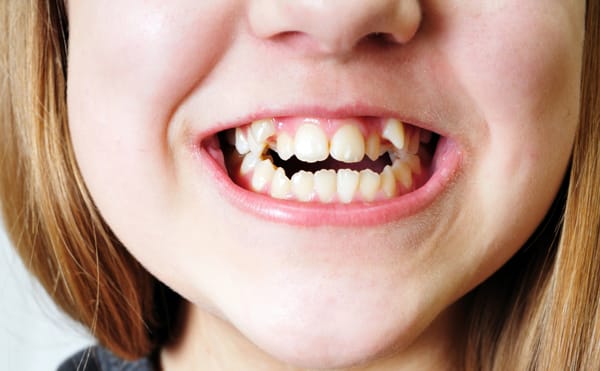
If you’ve spent years brushing past a crooked tooth in the mirror, or you’re a parent wondering when to bring your child in, you’re not alone. Misaligned teeth are one of the most common reasons people seek orthodontic care, and the good news is that fixing them has never been more straightforward. The better news? You have more options than you probably think.
Why Crooked Teeth Are Worth Treating
A lot of people assume crooked teeth are just a cosmetic concern. That’s understandable, but it’s only part of the story.
Uneven teeth create tight spaces that are genuinely difficult to clean. Even with great brushing habits, a toothbrush can’t reach every surface when teeth are overlapping or crowded. Over time, that leads to plaque buildup, a higher risk of cavities, and gum disease that might have been easy to prevent.
There’s also the bite to consider. Misaligned teeth often go hand in hand with bite problems like overbites, underbites, and crossbites that put uneven pressure on the jaw. That can cause jaw discomfort, headaches, and excessive wear on certain teeth. For kids whose jaws are still developing, leaving these issues untreated can make correction harder as they get older.
The cosmetic side matters too. Confidence is real. Feeling self-conscious about your smile affects how you show up in photos, conversations, and everyday life.
What’s Actually Causing the Misalignment?
Crooked teeth don’t come from one single cause. Tooth crowding, which happens when there isn’t enough space in the jaw for all the teeth to fit properly, is one of the most common culprits. Genetics play a big role here. If one or both parents had crowded teeth, there’s a good chance their kids will too.
Other common causes include:
- Losing baby teeth too early, which allows neighboring teeth to drift into the open space
- Prolonged thumb-sucking or pacifier use in early childhood
- Jaw size differences between the upper and lower arches
- Teeth that are simply too large or too small relative to the jaw
In many cases, a mix of factors is at play. That’s why an evaluation from an orthodontist, not just a general dentist, gives you the clearest picture of what’s going on and what will actually fix it.
Your Treatment Options
The right fix depends on what’s causing the misalignment, how severe it is, and your personal preferences. Here’s a look at the main paths forward.
Traditional Braces
Metal braces remain one of the most effective ways to correct crooked teeth, especially for complex cases. Brackets are bonded to each tooth, and wires apply consistent pressure to guide teeth into their proper positions over time. They work on almost any alignment issue, from mild crowding to significant bite problems.
For kids and teens especially, traditional braces are often the go-to recommendation. They’re durable, they don’t rely on patient compliance the way removable options do, and they handle the full range of orthodontic corrections well.
Clear Aligners (Invisalign)
Clear aligners have become extremely popular, particularly among adults who’d prefer a less visible option. A series of custom, removable trays gradually move your teeth with no brackets and no wires. You swap trays every one to two weeks as your teeth shift.
The trade-off is discipline. Aligners need to be worn 20 to 22 hours a day to stay on track. They’re removed for eating and cleaning, which is convenient, but skipping wear time adds up fast.
For mild to moderate misalignment, aligners deliver excellent results. For more complex cases, traditional braces may still be the better call, though your orthodontist will tell you honestly which fits your situation.
Lingual and Ceramic Braces
If discretion is a priority but you want the reliability of braces, there are options between traditional metal and clear aligners. Ceramic braces use tooth-colored brackets that blend in. Lingual braces (like Incognito) are bonded to the back of the teeth, completely hidden from view.
Both work similarly to traditional braces in terms of how they move teeth. They tend to cost more, and lingual braces can take a little longer to adjust to initially, but for patients who want near-invisible treatment with no compliance concerns, they’re worth exploring.
LightForce Braces
A newer option, LightForce braces use 3D-printed brackets that are custom-made for each individual tooth. Because they’re designed specifically for your mouth, they can move teeth more precisely, which often means more efficient treatment. They look similar to traditional braces but are built with a level of customization that standard braces don’t offer.
When Should Treatment Start?
For kids, the American Association of Orthodontists recommends a first evaluation by age 7. That doesn’t mean treatment starts at 7. Most kids begin between ages 10 and 14, when most of the permanent teeth have come in. But an early evaluation lets Dr. Andy spot developing problems and, when necessary, step in at a time when treatment is easiest and most effective.
For adults, there’s no age cutoff. Orthodontic treatment works at any age, and more adults than ever are getting braces or aligners. Teeth can be moved as long as the gums and bone supporting them are healthy.
If you’re unsure whether now is the right time, a consultation is the right first step. You’ll get a clear picture of what’s happening, what your options are, and what to expect, with no pressure to commit.
What Happens After Treatment?
Straightening your teeth is only part of the equation. Keeping them straight is what makes it last.
After braces or aligners, you’ll wear a retainer, typically every night, to hold your teeth in their new positions. This isn’t a temporary step. Teeth have a natural tendency to shift back over time, and a retainer is what prevents that. Most patients wear one indefinitely, though it becomes second nature quickly.
Schedule a Free Consultation
Crooked or misaligned teeth are extremely common, and they’re very fixable. Whether you’re looking into treatment for yourself or your child, the process starts with understanding what you’re working with. The types of braces available today cover a wide range of needs and preferences, and there’s rarely just one right answer.
We can answer your questions to keep your teeth and gums healthy – schedule a free consultation! Contact us online or call 440-842-8015
Stay connected with Doctor Andy on Social Media!


